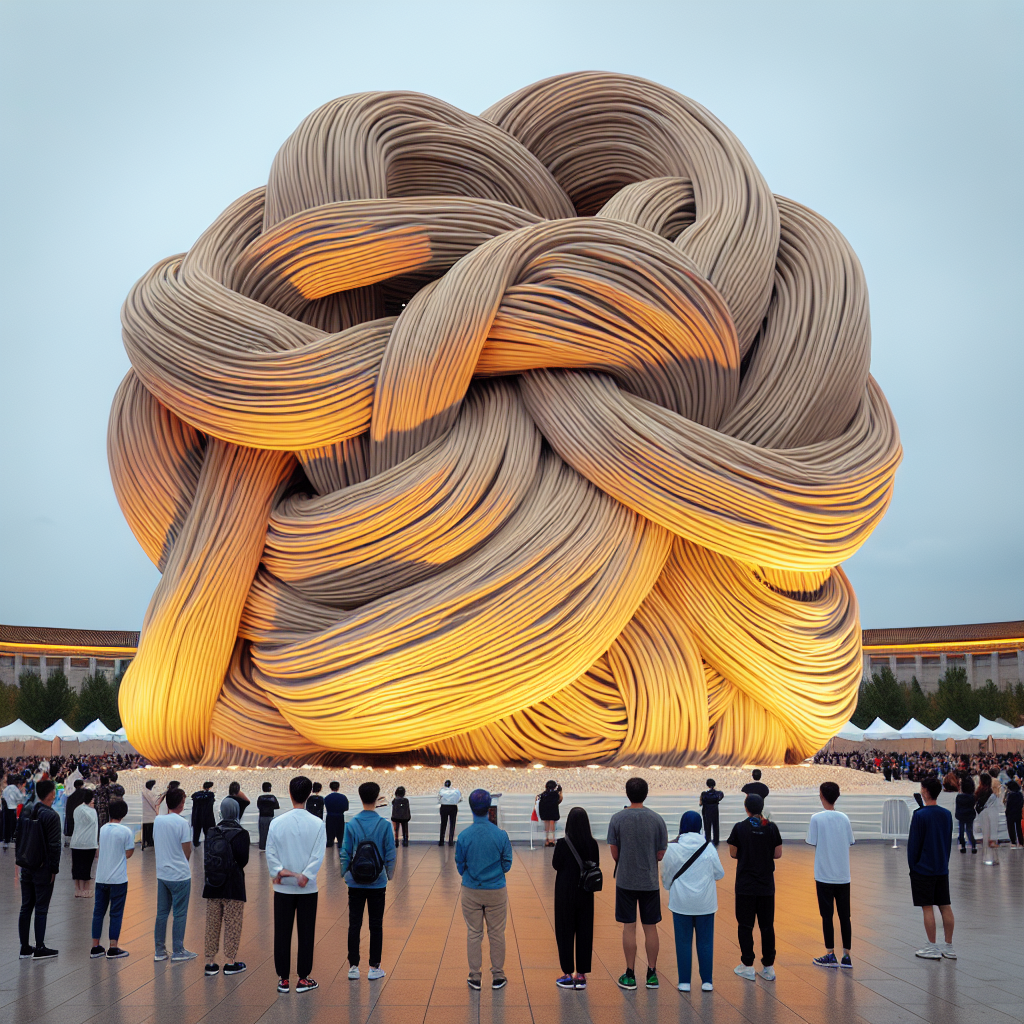
In an unprecedented event that left many scratching their heads in confusion, activists gathered in San Francisco on Sunday to commemorate the 80th anniversary of the Nanjing Massacre with the construction of the world’s largest inflatable ramen bowl. Hundreds of enthusiastic participants, clearly misinterpreting the solemnity of the occasion, inflated the colossal noodle vessel in an effort to promote peace through pasta.
The centerpiece of the event was a 200-foot long inflatable ramen bowl, filled with what organizers claimed were 'authentic' noodles, although a source confirmed they were actually just garden hoses painted yellow. 'We believe that food brings people together,' said local activist and self-proclaimed noodle scholar, Chen Mi. 'What better way to honor the past than with a bowl of comfort food that could fit an entire family of elephants?'
While the original Nanjing Massacre was a tragic event in history, the event's organizers insisted that the inflatable ramen served as a 'lighthearted' reminder of the need to transcend historical grievances in favor of culinary creativity. 'Who could stay mad when there’s ramen involved?' asked another participant, wielding a chopstick like a flag of peace.
Attendees were treated to a variety of noodle-related activities including a ramen-eating contest that set a new world record with 1,000 bowls consumed in under an hour. 'I'm pretty sure that’s a new statistic,' blurted out one competitor who was later found napping in a pile of noodles. 'It’s like a noodle party, but with a side of history,' he added, clearly not understanding the depth of the event.
“If we can forget the past over a bowl of ramen, then we can certainly move forward as a society,” stated Chen Mi, as the inflatable ramen began to deflate in the background.
As the inflatable bowl slowly lost air, activists hoisted their chopsticks in solidarity, declaring that they would hold a similar event next year featuring the world’s largest fortune cookie. 'We’ll call it the Great Cookie Commemoration of Nanjing,' joked one organizer, who was quickly met with laughter and a collective shrug from the crowd.
In an ironic twist, the inflatable ramen bowl ended up attracting a flock of seagulls who promptly mistook it for a buffet. While some saw this as a sign of disrespect, others hailed it as an opportunity to start a new trend in feathered activism. 'If a flock can unite over noodles, why can’t we?' asked a participant, oblivious to the fact that the birds were more interested in eating than uniting.
As the event drew to a close, the activists vowed to continue their mission of using food as a means of reconciliation. Plans are already underway for the next commemorative event, featuring the construction of an inflatable Peking duck as a tribute to ‘culinary diplomacy’.
With the growing popularity of such absurd remembrances, experts are left to wonder: Is this a step forward in historical understanding, or just a recipe for confusion?