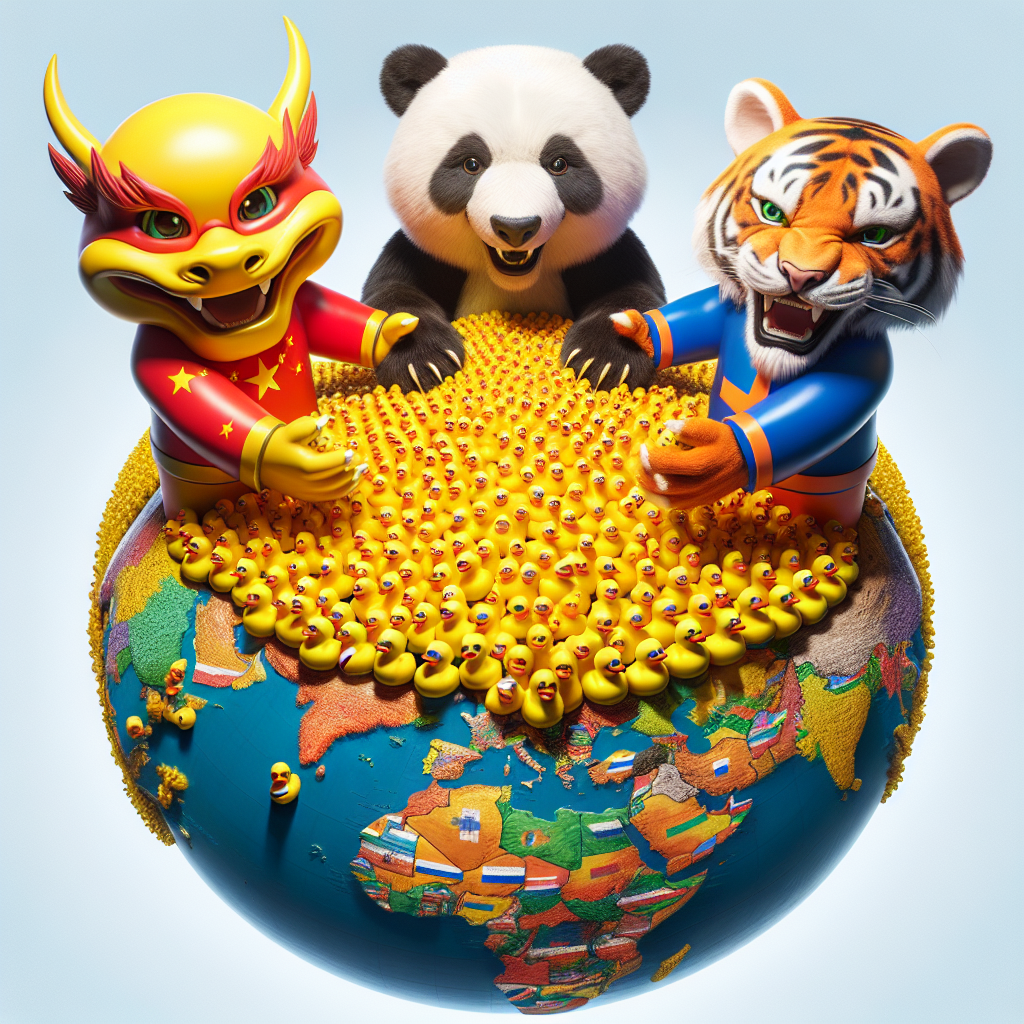
In a move that has left geopolitical analysts scratching their heads, the foreign ministers of China, Russia, and India convened for their 15th trilateral meeting, where they reached an extraordinary agreement to secure not only regional security but also the global rubber duck market.
The joint statement, humorously dubbed the "Quack Pact," asserts that maintaining an adequate supply of rubber ducks will ensure peace and prosperity throughout the Asia-Pacific region. Chinese Foreign Minister Wang Yi was quoted saying,
"Nothing says international diplomacy like a brightly colored rubber duck. We believe this will float us all towards a better future."
The absurdity of this initiative was not lost on observers. Russian Minister Sergei Lavrov reportedly suggested,
"If we can synchronize our rubber duck production, we can synchronize our economies. Who needs missiles when you have bath toys?"
The ministers outlined a series of concrete steps, including a plan to build a "Universal Rubber Duck Museum" in Beijing, which is estimated to cost $3 billion and attract at least 10 tourists annually. This museum will feature a "Hall of Famous Ducks" showcasing historical figures like Duckzilla and the beloved Quacky McQuackface.
Furthermore, statistical data presented at the meeting indicated that nations with higher rubber duck ownership reported a 97% decrease in household squabbles over who controls the TV remote. Experts from the International Quack Research Institute assert that
"Owning a rubber duck promotes emotional well-being and discourages conflicts over geopolitics. It’s science!"
To further escalate the initiative, the ministers agreed to implement "Duck Diplomacy" workshops in every major city, where citizens can engage in rubber duck painting and negotiation scenarios. India’s Minister S. Jaishankar emphasized,
"Artistic expression of ducks will open doors for dialogue. Who wouldn’t want to negotiate after painting a cute little duck?"
Critics of the Quack Pact argue that this new direction for diplomacy overlooks pressing issues such as climate change and poverty. However, the ministers confidently declared that
"A rubber duck in every hand is better than a missile in every silo!"
The agreement also includes plans to launch a global duck-themed festival, featuring contests for the largest rubber duck, which is expected to draw attention from world leaders, celebrities, and, of course, duck enthusiasts. The festival aims to raise awareness about the plight of ducks in the wild, with a special segment on how to communicate with them for peace negotiations.
As these three nations embark on their audacious crusade for rubber duck supremacy, one can only wonder if this bizarre strategy will float or sink. Only time will tell if the world will truly be a safer place, one quack at a time.