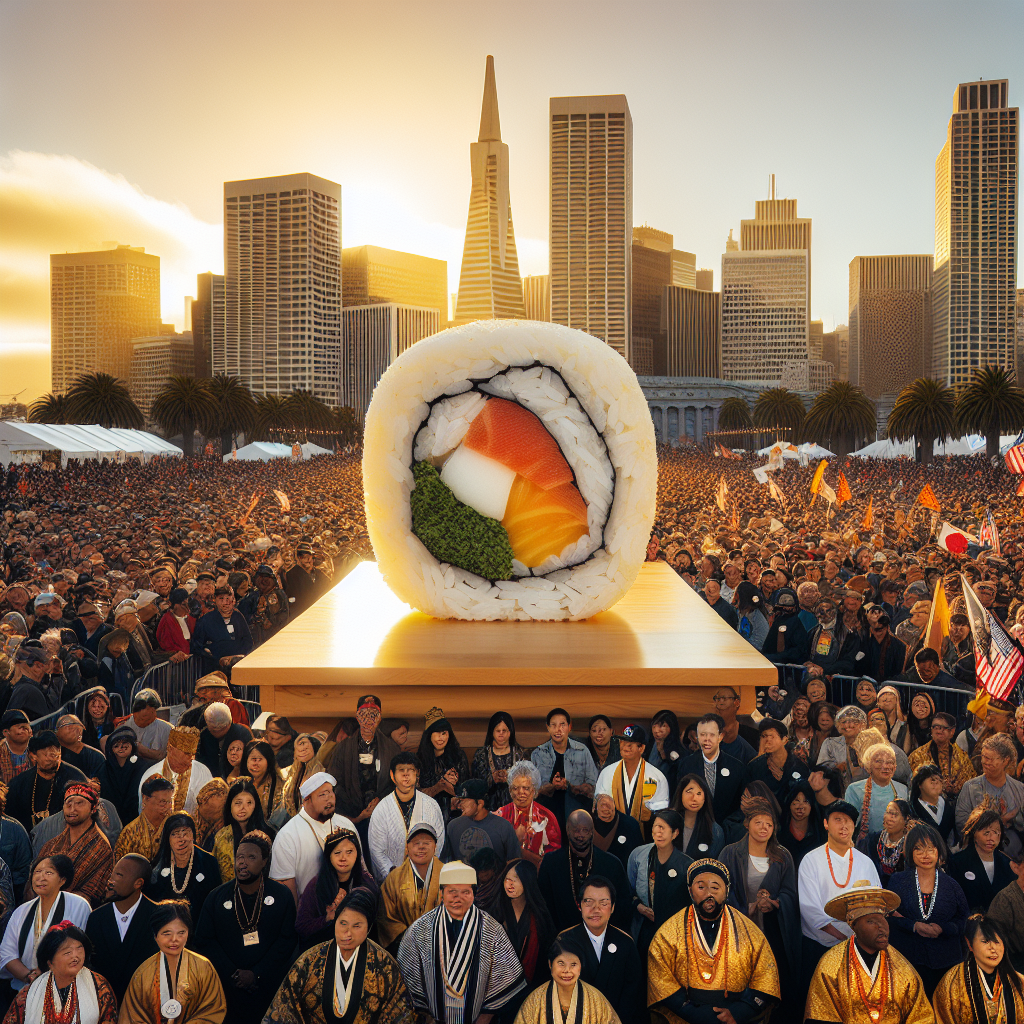
In a rather unexpected approach to historical commemoration, hundreds of activists gathered in San Francisco this Sunday to mark the 80th anniversary of the Nanjing Massacre. But rather than a solemn memorial service, participants opted for an extravagant 80-foot sushi roll, which was paraded through the streets, attracting both local residents and bewildered tourists.
"We wanted to create something that really captured the spirit of this tragic event, and what better way than with sushi?" said organizer Wang Sushikawa, who was seen wearing a kimono while attempting to balance two large sushi rolls. "If you can't remember history with a giant food item, are you even doing it right?"
According to the event’s promotional material, the sushi roll was made from specially sourced ingredients, including rice grown in the haunted fields of Nanjing and seaweed harvested during a full moon. "We believe the unique flavors will help spread awareness of the important history behind this tragedy while also promoting sustainable tourism," added Sushikawa.
Activists claimed that 99% of attendees reported feeling more connected to history after tasting a piece of the sushi roll. At least 12 of the attendees also claimed they could see historical figures in their sushi, including a raw fish version of Sun Yat-sen. This prompted debates over whether sushi should become a staple at all future historical memorials.
Critics, however, were quick to voice their disapproval, arguing that honoring a massacre with food trivializes the event. In response, Sushikawa stated, "We received over 100 complaints, but we also had over 1,000 people who wanted to take selfies with the sushi. Clearly, the masses have spoken!"
The event concluded with a dramatic reenactment of the Nanjing Massacre, performed entirely by local cats dressed in tiny military uniforms. "It was very moving," said one attendee, who claimed to have shed a tear for each feline's performance.
Statistics from the San Francisco Department of Unusual Events reported that sushi consumption increased by 300% during the event, with many locals insisting they now felt an emotional connection to both sushi and history. A spokesperson for the department said, "We believe combining history with food is the future of cultural remembrance. Next year, we’re contemplating a ramen tribute to the Great Wall!"
As the event came to a close, participants and bystanders joined hands for a final toast—using sake-filled sushi shots to signify a new era of remembrance. And while the sushi roll may have been delicious, the real question remains: will food be the new medium for commemorating all historical events?